Affection & physical connection
Why Doesn't My Boyfriend Touch Me Anymore?
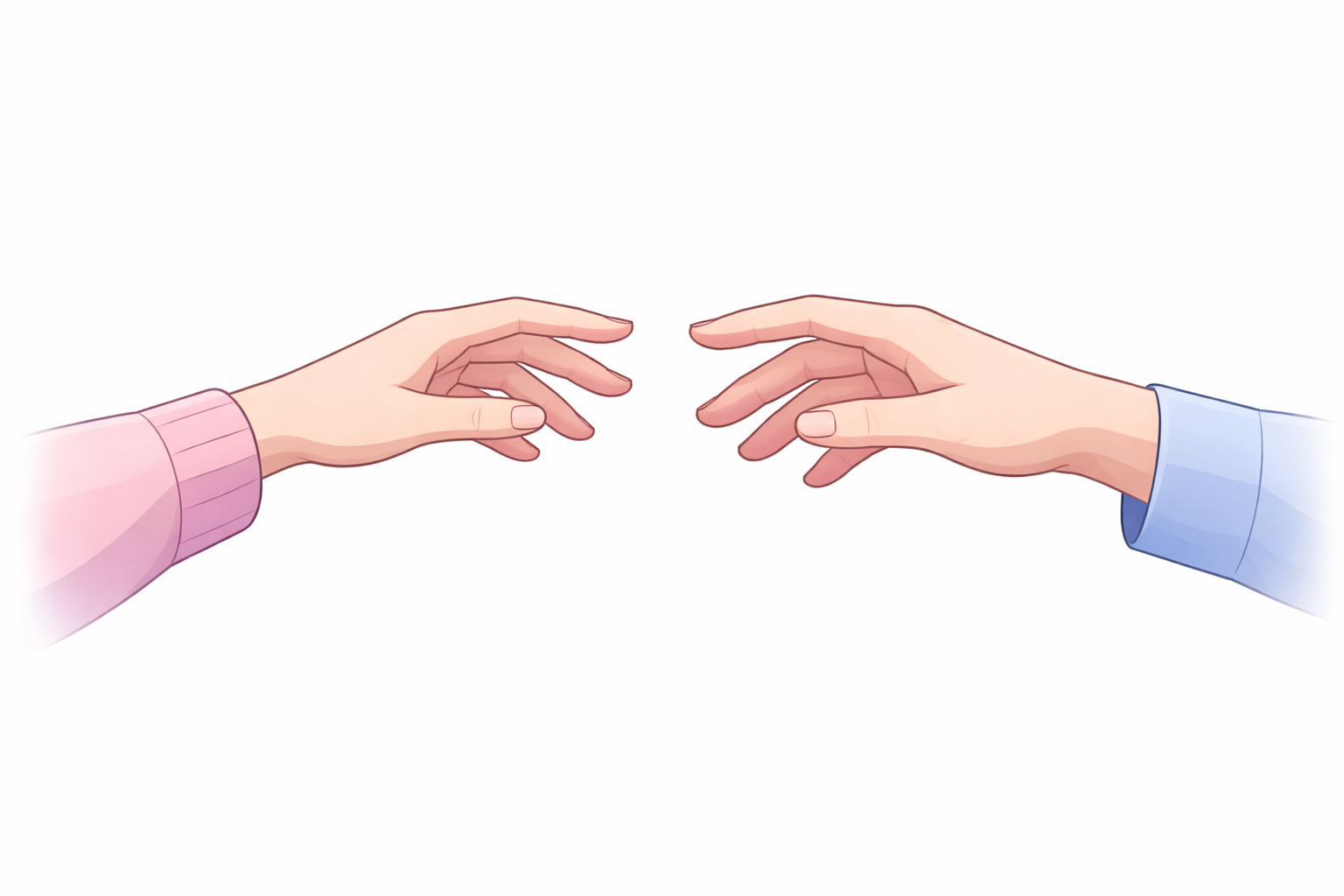
He used to reach for your hand without thinking. He used to sit close on the couch, brush past you in the kitchen, kiss you on the forehead in the morning. The touch wasn't a strategy — it was just there, the way the air is there. And now it isn't. He still shows up. He still says he loves you. But the small physical contact that used to happen by default has quietly stopped happening, and you're left wondering when exactly that shift took place.
Touch is one of the most honest signals in a relationship. It's harder to fake than words, harder to schedule than time, and harder to perform on command than affection in general. Which is why when it disappears, the absence carries a particular weight — and why making sense of it requires more than guessing.

Why touch is the most honest relationship signal
Words can be reflexive. Time can be scheduled. Affection in general can be performed for an audience. But touch operates closer to the nervous system than any of these. Reaching for someone is a small, almost involuntary act of orientation — your body deciding, faster than your conscious mind, that this person is someone you want to be near. When that orientation stops happening, the absence is registering something real, even if neither of you can name what.
This is why women often notice the touch shift before they notice anything else. You may not yet be able to articulate that something has changed in the relationship, but your body has already registered the difference: the hand that used to rest on yours doesn't anymore. The shoulder that used to press into yours on the couch isn't pressing. The morning hug that used to be automatic is now skipped or perfunctory. None of these individually mean anything dramatic. Together they form one of the most reliable patterns of relational shift.
If you keep wondering whether you're reading this correctly or making something out of nothing, see Am I Overthinking or Is He Losing Interest?
The three layers of touch — and what each one's decline means
Touch in a relationship isn't one thing. It operates on three distinct layers, each with its own meaning. When you're trying to make sense of what's changed, the most useful first step is identifying which layer specifically has gone quiet.
Layer 1: Casual maintenance touch
The smallest layer, and the most diagnostic. A hand on the back as he passes. A brief touch on the shoulder. Sitting with his leg against yours on the couch. A kiss on the forehead while you're cooking. These small contacts happen below conscious decision — they're your body and his orienting toward each other throughout the day. When this layer goes quiet, it usually signals that the underlying default has shifted. Not hostility, not even necessarily decline — but a quiet recalibration where you're no longer the person his body reaches toward without thinking.
Layer 2: Affectionate touch
The middle layer. Hugs that linger. Holding hands walking down the street. Sitting close on purpose. An arm around your shoulders. These are slightly more deliberate than casual maintenance touch — they require a small amount of choice. When this layer goes quiet, it usually signals that he's less inclined to make the small effort that affection requires. This can be temporary (stress, exhaustion) or more enduring (emotional withdrawal, loss of relational urge).
Layer 3: Sexual touch
The most variable layer. Sexual intimacy follows its own complicated arc in any long-term relationship, and its decline carries a different meaning than the decline of the other two layers. When sex specifically has reduced or stopped but casual maintenance touch and affectionate touch are still present, the issue is usually something specific (stress, physical issues, mismatched libido) rather than relational withdrawal. When sex has stopped *and* the other two layers are also quiet, the pattern usually points at something broader.
What the layered pattern reveals
The most useful diagnostic isn't whether any single layer has changed — it's which combination has changed:
- Casual touch gone, others present: Early-stage emotional drift. He still wants the relationship but is no longer in the low-effort, default-on mode of orientation. Often the first warning sign before larger shifts.
- Affectionate touch gone, casual touch present: Likely contextual — stress, fatigue, or a phase. Not concerning if temporary.
- All three layers gone: Broader relational withdrawal. The body's signal aligns with what other layers of the relationship may also be telling you. Worth paying close attention to.
- Only sexual touch gone, other layers fine: Usually about something specific rather than the relationship as a whole. Worth a direct conversation about what's actually happening.
Trying to figure out which combination of shifts is actually happening in your relationship? Take the relationship assessment to see the full pattern.
The most common reasons touch quietly disappears
When touch fades, the cause almost always falls into one of four categories. Knowing which one you're in matters more than the fact of the fade itself.
1. Stress has narrowed his bandwidth
The most common version. Work pressure, depression, chronic exhaustion, family stress, or any major life pressure compresses someone's emotional availability — and touch is often the first thing to drop because it requires the kind of low-grade emotional presence that stress consumes. In this version, the relationship itself is fine; his nervous system is overwhelmed. For more on distinguishing stress-driven changes from something deeper, see Is Your Boyfriend Losing Interest or Just Stressed?
2. The relationship has settled in a way that lost the touch
Long-term relationships develop their own touch rhythms, and sometimes the rhythm settles into a new baseline where less physical contact happens — not because anything is wrong, but because the dynamic gradually shifted without either of you noticing. This is workable if both of you are willing to reintroduce intention to it. Less workable if neither of you is actively noticing or addressing the drift.
3. He's pulling back emotionally
The hardest version. Touch has reduced because his emotional investment in the relationship has quietly thinned — and the body is reflecting what the emotional layer is doing. In this version, touch is the signal, not the problem. The cause is upstream — somewhere in his relationship to you that hasn't yet been named out loud. For the broader pattern this can fit into, see He Says He Loves Me But Doesn't Show It.
4. Something specific has happened he hasn't said
Sometimes touch reduces because of something concrete he hasn't shared — an unresolved hurt, a specific resentment, a feeling he's been sitting with. The touch withdrawal is a symptom of a withholding that hasn't been voiced. This version can usually be repaired if the underlying thing is named, but it can't be repaired around — only through.
How to tell which version you're in
The clearest test is what shifts when his external circumstances shift. If he had a hard work month and touch reduced, and then work eases and touch returns — version 1. If the touch reduction has been steady regardless of his external state, the cause is internal to the relationship dynamic (version 2, 3, or 4). The duration also matters: stress-driven reduction usually resolves within weeks to a few months of the stressor easing. Reduction that persists past changes in circumstance is usually pointing at something deeper.
Not sure which of the four versions you're actually in? Check your relationship patterns for a structured read.
The worst things to do right now
The instincts when touch fades are mostly wrong, and they tend to make the situation worse. Naming them clearly is the first step to not falling into them.
Don't try to manufacture the touch back
The temptation to initiate more touch yourself — hugging him longer, holding his hand more deliberately, sitting closer hoping he'll relax into it — almost always backfires. Touch that's being performed to provoke a reaction doesn't produce the natural orientation you're actually missing. He can usually feel the difference between organic contact and contact-with-an-agenda, and it tends to make him pull back further. Trying harder isn't how touch returns.
Don't turn the touch absence into the conversation
Naming the touch reduction directly ("you've stopped touching me") almost always lands badly. Touch is too vulnerable and too unconscious a topic to discuss head-on. He'll usually deny the pattern, get defensive, or perform touch for a week before returning to baseline. The conversation that actually moves the dynamic is about the broader emotional shape of the relationship, not the specific gesture that's missing.
Don't withdraw touch yourself to test him
The thought is sometimes: maybe if I stop initiating, he'll start. Usually this just accelerates the dynamic. Two people both waiting for the other to reach first produce a relationship in which neither ever does. The touch absence hardens into the new normal faster than it would have otherwise.
Don't catastrophize every individual moment
You will notice every missed opportunity now — every time he didn't touch your back as he passed, every time he didn't reach for your hand. The hyper-noticing is part of how anxiety works in this situation. Try not to grade each moment individually. Watch the broader pattern over weeks. Individual moments will give you false readings in both directions.
What actually helps
Touch usually returns through indirect routes, not direct ones. The interventions that work are ones that address the underlying state of the relationship rather than the touch itself.
Have the broader conversation
The most useful conversation isn't about touch. It's about how the relationship feels overall — to you, to him, to both of you together. Touch reductions almost always trace back to something larger that hasn't been named. Find a calm moment and ask, without urgency, how he's actually been feeling about everything lately. The honest version of that conversation often unlocks what the body has been showing you. For how to approach this kind of conversation, see How to Talk to Your Boyfriend About Your Relationship.
Address stress, not touch
If the cause is bandwidth narrowing, the most effective intervention is supporting the underlying load, not chasing the missing touch. Easing his bandwidth (less pressure from you, more space for him to recover) usually produces the natural return of touch on its own. Demanding touch when stress is the cause feels to him like one more weight, which is exactly what reduced his capacity in the first place.
Re-create the conditions touch needs
Touch doesn't arrive in tense, distant, high-stakes interactions. It arrives in low-key, easy, unstructured time together. Walks. Cooking dinner. Sitting on the couch with no agenda. Increasing the *quality* of casual shared time — and reducing the heaviness of the broader dynamic — often produces touch's return without anyone having to engineer it directly.
Be honest about the timeline
Touch that has been gone for weeks usually returns when the underlying state shifts. Touch that has been gone for many months without any upward movement is harder to recover, especially if other layers of the relationship are also quietly thinning. Don't put a deadline on it externally, but pay attention internally to how long you've been in this state and whether anything is shifting. If the absence has hardened into a year or more without change, the touch reduction has stopped being a phase and started being information.
Recognize when the absence is the answer
If, after time and honest conversation and the underlying state easing, touch hasn't returned — and other layers of the relationship are also showing the same quiet withdrawal — the pattern is telling you something larger than the specific gesture that's missing. The question shifts from "how do I get the touch back?" to "what is this relationship now?" For a way to sit with that question, see Should I Stay or Leave My Relationship?
Ready for an honest read on what the touch pattern in your relationship is actually telling you? Take the relationship assessment to see the full picture clearly.
Key takeaway
Touch is one of the most honest signals in a relationship — harder to fake than words, harder to schedule than time, closer to the nervous system than almost anything else. When it fades, the cause is usually one of four things: narrowed bandwidth from stress, a settled rhythm that quietly lost intentional touch, deeper emotional withdrawal, or something specific that hasn't been said out loud. Identifying which layer of touch has gone quiet (casual / affectionate / sexual) is the most useful first step toward understanding what the change actually means. Trying to manufacture touch back almost always fails — touch returns through addressing the underlying state of the relationship, not the specific gesture that's missing. Watch the trajectory across weeks, not individual moments, and trust the body's long signal more than any single day.
Keep exploring this topic
Continue reading in Signs Your Partner May Be Losing Interest or return to Relationship Signals & Patterns.