Affection
Less Affectionate: What It Means in a Relationship
Less affectionate means a partner shows physical and emotional warmth less often than they used to — fewer hugs and kisses, fewer affectionate words, less spontaneous closeness in ordinary moments. In a relationship, that usually reflects stress, emotional distance, or a shift in connection rather than a sudden loss of love. What separates the two is whether the reduced warmth keeps repeating and starts showing up alongside other changes.
Less affectionate — showing noticeably less physical and verbal warmth than before: fewer hugs, kisses, and casual touches, fewer affectionate words, and less spontaneous closeness in everyday moments.
In a relationship, being less affectionate describes a change in pattern rather than a fixed personality trait. It matters most when the reduced warmth continues instead of passing with a stressful week.
Less affection in a relationship can feel significant very quickly. The change may show up as less touching, fewer hugs, fewer affectionate messages, less warmth in everyday moments, or a relationship that simply feels less soft and emotionally close than it used to.
That shift does not always mean love is gone. But a lack of affection in a relationship often changes how secure, connected, and emotionally reassured the relationship feels. What matters most is not one quiet week, but whether reduced affection has become a repeated pattern.
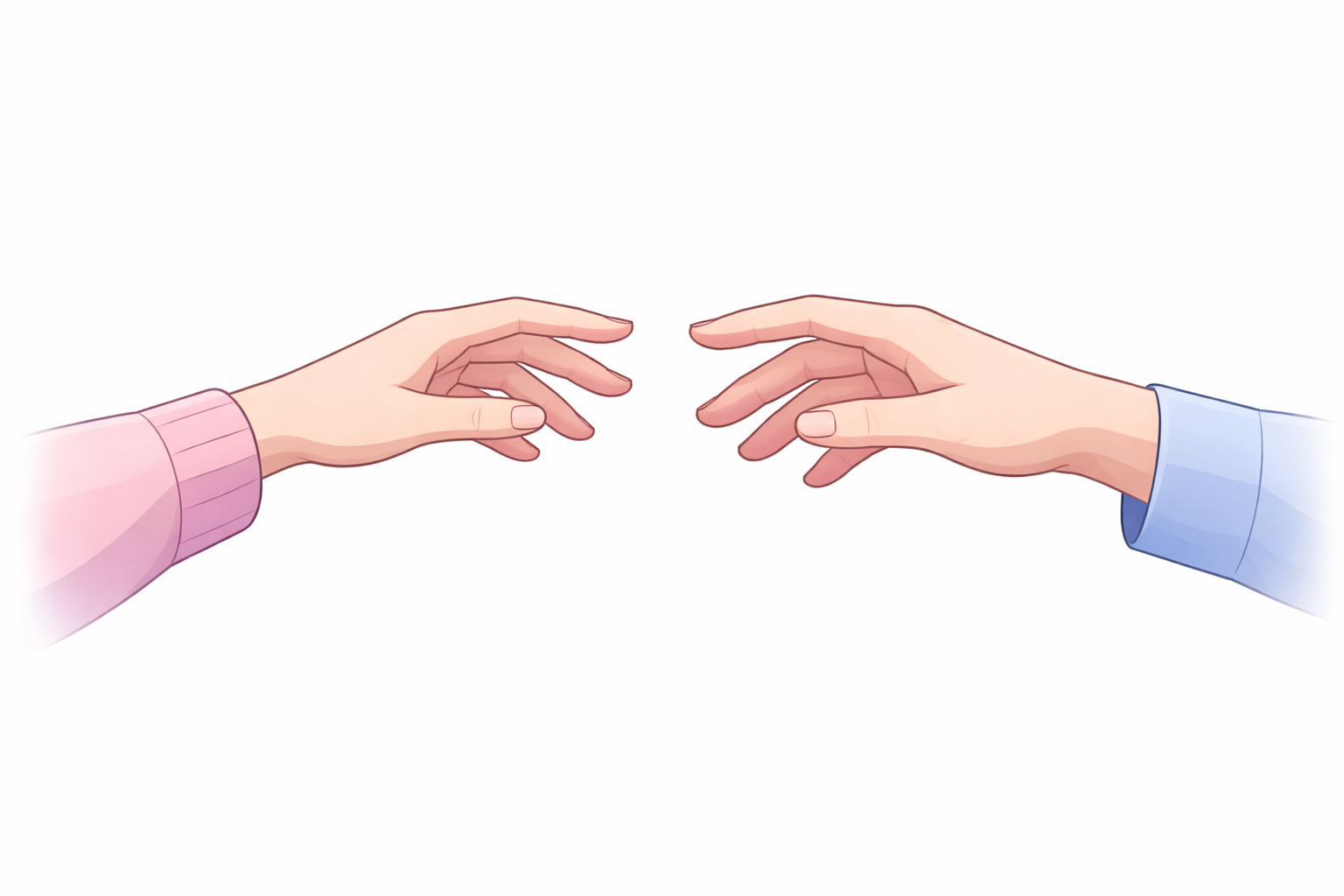
What does less affection in a relationship mean?
Less affection in a relationship can mean different things depending on context. Sometimes it reflects stress, exhaustion, emotional overload, routine, or life pressure. In other cases, reduced affection can reflect emotional distance, unresolved resentment, lower relationship energy, or a broader shift in connection.
The key is not to treat affection as a single isolated signal. What matters more is whether the relationship feels less affectionate in a wider way and whether reduced warmth appears alongside other changes like less curiosity, lower effort, flatter conversation, or weaker initiative.
Signs of less affection in a relationship
A lack of affection in a relationship rarely begins all at once. More often, it appears through small repeated changes that alter the emotional feel of the relationship over time. Warmth feels less natural. Touch happens less spontaneously. Everyday closeness no longer feels as mutual or emotionally present as before.
These signs tend to matter most when they repeat. One emotionally quiet phase usually does not mean much by itself. But when the relationship consistently feels less affectionate, the pattern often becomes more meaningful.
1. Affection feels less spontaneous than it used to
One of the clearest signs is that affection no longer happens naturally. What once felt instinctive may begin to feel less frequent, less fluid, or more absent unless one person initiates it directly. The relationship may still contain affection, but not in the same easy, unforced way.
This matters because spontaneous warmth often reflects comfort and emotional availability. When it fades, people usually sense the change before they can fully explain it.
2. Physical closeness becomes less mutual
Reduced affection can also show up through changes in everyday closeness. A partner may pull away from casual touch, seem less responsive to affectionate gestures, or participate in physical warmth less naturally than before. The issue is often not only how much affection happens, but whether it still feels mutual.
When one person keeps trying to maintain softness and the other seems less engaged in that layer of the relationship, the bond can start to feel emotionally uneven.
3. The relationship feels less warm even when nothing is “wrong”
One reason less affection can be so confusing is that there may be no major argument or clear event to point to. The relationship simply starts feeling less warm, less emotionally expressive, or less naturally comforting in everyday moments.
This quieter kind of change often matters because affection helps create the emotional atmosphere of a relationship, not just isolated behaviors.
4. Affection feels more routine than emotionally present
Sometimes affection does not disappear completely, but it changes in quality. Gestures may still happen, yet feel more automatic than emotionally engaged. In those cases, the lack of affection is not only about frequency. It is about affection losing some of its emotional warmth and felt meaning.
This can be hard to describe because there is no obvious rejection. The affection is technically still there, but it no longer feels as emotionally alive.
If reduced warmth is appearing alongside other quiet changes, analyze my relationship to look at the overall pattern more clearly.
5. Less affection starts affecting emotional security
When affection decreases, the emotional impact is often larger than the behavior itself. People may begin feeling less reassured, less wanted, less emotionally secure, or less confident about where they stand. Even if daily life continues normally, the relationship can begin feeling less emotionally safe and less expressive.
That is why a relationship with less affection often feels meaningful long before anyone labels it as a serious problem.
Why there may be less affection in your relationship
There are many reasons there may be less affection in a relationship. Sometimes the cause is external: stress, health strain, parenting demands, burnout, emotional overload, family pressure, or simple exhaustion. In those cases, the relationship may feel less affectionate because both people have less energy available. The period after a baby arrives is the most common version of this, and one of the hardest to interpret, which is why it helps to look at what a husband's distance after a baby usually means before reading the drop in warmth as a loss of interest.
In other cases, reduced affection reflects something more relationship-specific: emotional distance, unresolved resentment, fading closeness, lower attraction, disappointment, or a broader shift in how connected one or both partners feel.
When reduced affection may be temporary
It is important not to overread every dip in warmth. Many people become less affectionate during difficult periods without that meaning the relationship is failing. A temporary reduction in affection often happens during stressful seasons, emotionally flat phases, or periods where life pressure narrows how much closeness people can naturally offer.
The difference is often whether the relationship still feels caring, transparent, and reconnectable underneath the dip.
When lack of affection points to a larger pattern
The signal tends to matter more when less affection appears alongside other repeated changes. A partner may also seem less curious, less responsive, less interested in deeper conversation, less likely to initiate contact, or less emotionally present overall. In those cases, the lack of affection is usually not standing alone.
For a broader view, you may also want to read Early Signs Your Partner May Be Losing Interest.
What matters most is the pattern over time
The most useful way to interpret less affection in a relationship is to look at repetition over time. One stressful week or one emotionally flat stretch rarely means very much on its own. But when reduced warmth continues and begins pairing with other signs of distance, the pattern often becomes much more significant.
Looking at the broader pattern helps you understand whether there is simply less affection for now, or whether the relationship has become less affectionate in a more durable way.
When the relationship feels different but hard to define, check relationship patterns to put those signals into clearer context.
Key takeaway
Less affection in a relationship does not always mean love or interest is disappearing. But when the relationship feels consistently less affectionate — less warm, less spontaneous, less mutual, and less emotionally present — it can reflect a broader shift in connection. The most useful way to understand it is to look at the full pattern rather than one affectionate moment alone.
Keep exploring this topic
Continue reading in Signs Your Partner May Be Losing Interest or return to Relationship Signals & Patterns.